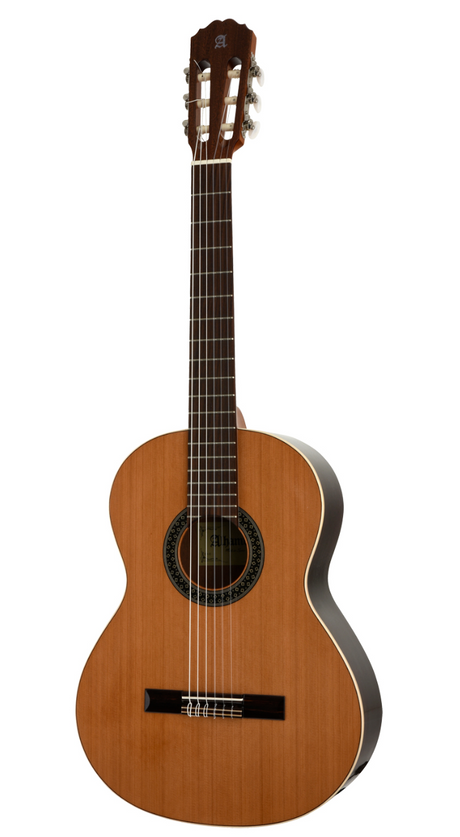
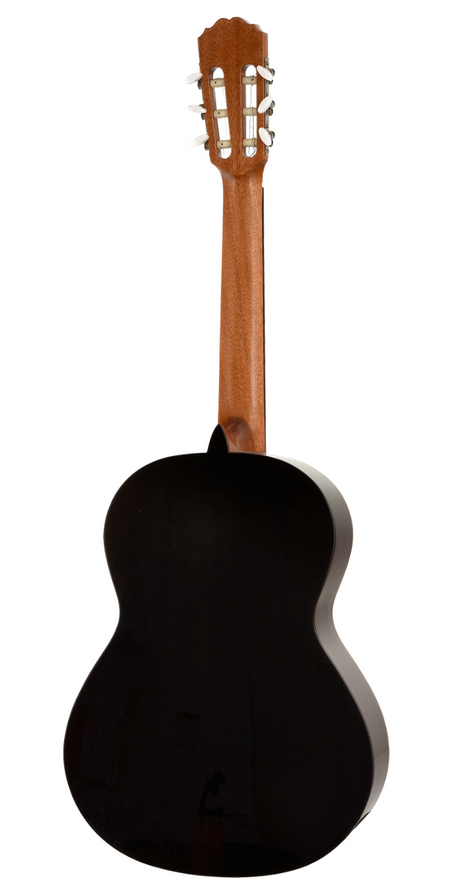
When the first guitar lessons are coming up, the key question is rarely the brand — it's the size. The right classical guitar size for a child depends mostly on age and height: a guitar that is too big makes fretting a struggle, while one that is too small is quickly outgrown.
This guide sorts the common sizes 1/4, 1/2, 3/4, 7/8 and 4/4 by age and height, explains what scale length and body size mean, and shows why the classical guitar, with its soft nylon strings, is the gentle starting point for small hands.
01Why a classical guitar is the right way to start
Classical guitars are strung with nylon strings. These are much softer than the steel strings of an acoustic or folk guitar and press less into the fingertips. Children, whose hands are still delicate, find it easier to enjoy practising as a result.
They also have a wider, flat neck that makes it easier to fret individual strings, and a light body. For first lessons at school or music school, the classical guitar has long been the standard instrument. The move to steel strings comes only later, once interest turns toward pop or folk.
02Scale length and body: what really sets the size
"1/2" or "3/4" sounds like a fixed fraction, but it is more a category than an exact measurement. Two values matter: the scale length and the body size.
The scale length is the vibrating string length between nut and bridge — it determines how far a child has to stretch their fingers when fretting. A 4/4 guitar has a scale length of about 65 cm, a 1/2 guitar only about 53 cm. The smaller the hand, the shorter the scale length should be. The body size, in turn, decides whether the child can hold the guitar comfortably against their body without the arm reaching too far over the edge. Both values grow with the size step.
03Size chart: which size suits which age
Age is a good first guide, but height is more precise — children grow at different rates. When in doubt: choose the smaller size in which the child can fret securely, rather than the larger one they still have to grow into.
The chart below sorts the common sizes by age, height and approximate scale length. It is meant as a guideline; trying the guitar out remains the best test.
| Size | Age (approx.) | Height | Scale length (approx.) |
|---|---|---|---|
| 1/4 | 5–6 years | approx. 110–120 cm | approx. 48 cm |
| 1/2 | 6–8 years | approx. 115–125 cm | approx. 53 cm |
| 3/4 | 8–11 years | approx. 125–140 cm | approx. 58 cm |
| 7/8 | 10–12 years | approx. 135–150 cm | approx. 63 cm |
| 4/4 | from 12 years / adults | from approx. 150 cm | approx. 65 cm |
041/4 and 1/2: the start for the youngest players
For the youngest beginners, from around five to six years, the 1/4 guitar is the right choice — light, short-scale, and a fit for heights of roughly 110 to 120 cm. From around six to eight years, you move up to the 1/2 size, which offers a little more volume without overstretching small hands.
Good playability matters at both steps: solidly built beginner models from established brands such as Gewa, Prodipe or Pro Arte keep the action low, so fretting stays easy. The GEWA Konzertgitarre Student Cedar 1/2 is a typical 1/2 beginner instrument, while the Prodipe Primera 1/4 Kurzmensur Konzertgitarre Fichte covers the smallest size.


053/4 and 7/8: the most common school sizes
The 3/4 guitar is by far the most common size at primary-school age — it suits roughly eight to eleven years and is often the music school's recommendation for a first instrument of one's own. Investing in a well-made guitar here gives you an instrument that lasts several years.
The 7/8 size (also called "Senorita") bridges the gap to the full-size guitar: ideal for children of about ten to twelve, or for teenagers and adults with smaller hands who find the 4/4 scale too much of a stretch. Popular models range from the Prodipe Primera 3/4 Kurzmensur Konzertgitarre Fichte through the higher-grade La Mancha Rubi CM/59 Konzertgitarre Zeder massiv 3/4 to the Alhambra 1C Konzertgitarre Zeder massiv 3/4 inkl. Tasche and its 7/8 sibling Alhambra Senorita 1C HT Konzertgitarre Zeder massiv 7/8 inkl. Tasche.


06When to move up to the next size
It is time to move up when the child has to noticeably overstretch the left arm to reach the nut, or when the body tips on the thigh. A simple test: sitting upright with the guitar in playing position, the left arm should stay slightly bent at the elbow and the fretting hand should rest relaxed around the neck.
As a rule, a child grows into the next step every one to two years. Since the guitar grows along with the whole learning journey, it is worth browsing the full Konzertgitarren — that way the next size is easy to find from the same source.
The right size is half the battle: a well-fitting classical guitar makes practising easier and keeps motivation high. Use age and height as your guide, choose the smaller step when in doubt — and plan for the next size to follow within one to two years.
Frequently asked questions
What guitar size does my child need at age 7?
How does a classical guitar differ from an acoustic guitar?
What does scale length mean on a child's guitar?
When should my child move to a bigger guitar?
From what age can a child start playing guitar?
Find the right size for the new school year
From 1/4 to 4/4 — classical guitars from established brands such as Gewa, Alhambra, La Mancha and Pro Arte for every age.
Browse all classical guitarsClassical guitars 3/4Passende Produkte
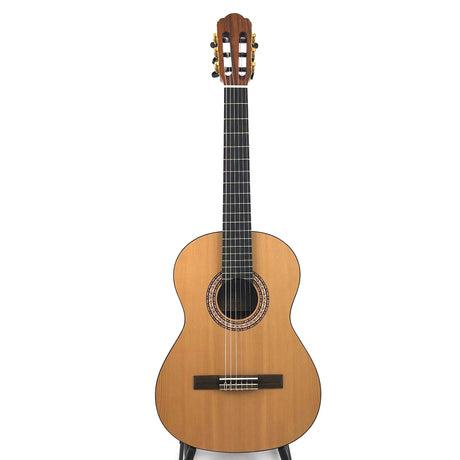
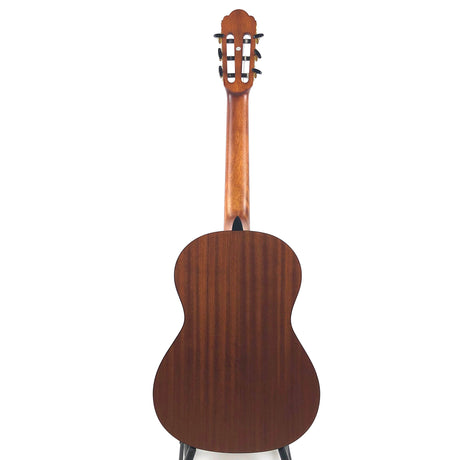
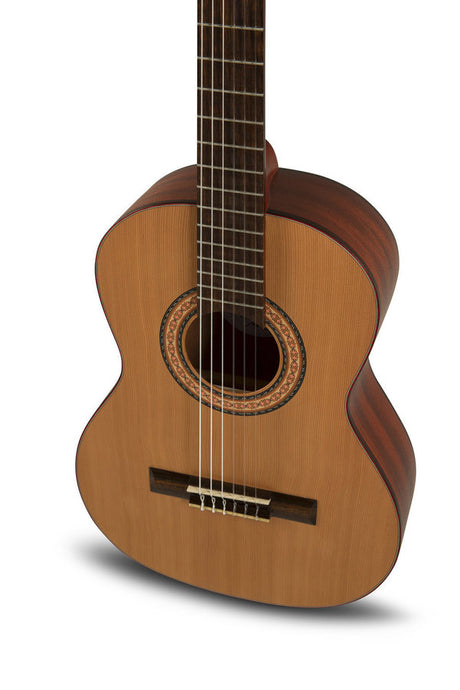
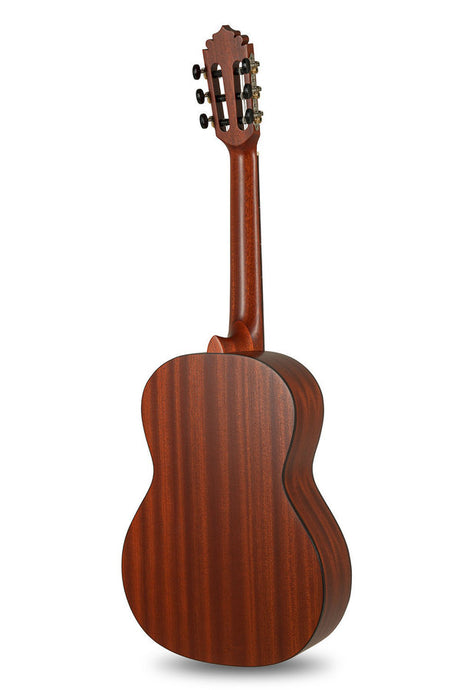
Prodipe Primera classical guitar 3/4 – solid spruce top, short scale, mahogany back and sides
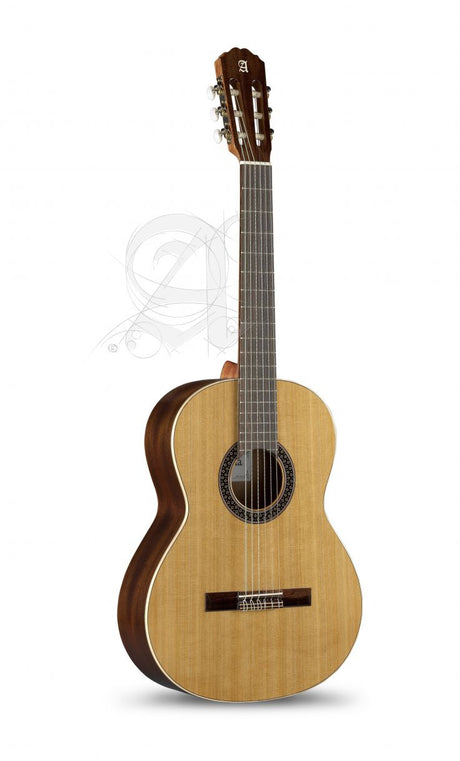
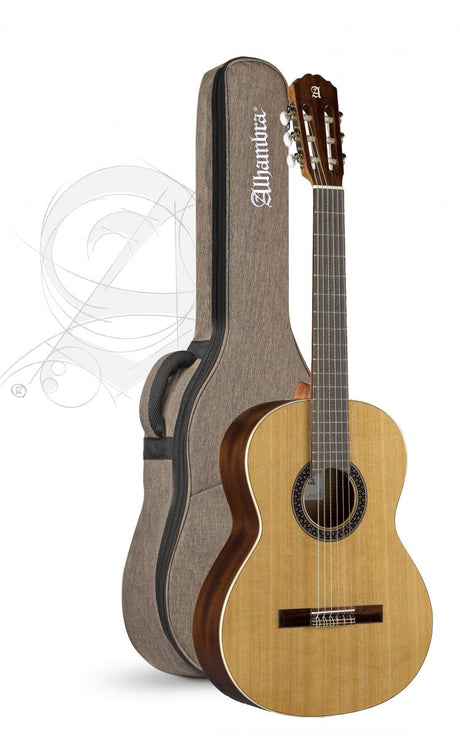
Alhambra 1C classical guitar 3/4 – solid cedar top, sapele back and sides, includes gig bag