

A beginner keyboard should do one thing above all: let you start without hurdles. Light, affordable, with built-in speakers and hundreds of sounds to explore – that is the idea behind instruments like Yamaha's PSR-E range or Casio's CT-S series.
But what can such a keyboard really do, how does it differ from a digital piano and what matters for a first purchase? This guide sorts out the terms and points you to the right entry-level models.
01What defines a keyboard
A keyboard is a light, portable keys instrument with built-in speakers. Typical features are 61 light, often touch-sensitive keys, a large sound library with hundreds of voices, auto-accompaniment with rhythms and styles, plus learning and recording functions.
The appeal for beginners is the easy start: compact, ready to play, comparatively affordable. Models like the Yamaha Keyboard PSR-E 283 - 61 Tasten - DAS IDEALE EINSTEIGER KEYBOARD or the Casio Keyboard CT-S100 combine exactly this mix – plenty of sounds to discover, built-in speakers and a weight even a child can carry.


02Keyboard or digital piano – what's the difference?
The question comes up early: keyboard or digital piano? In short, the two differ in keys and purpose.
A keyboard usually has 61 light keys, many sounds and auto-accompaniment – it aims at versatility, pop, entertainment and an easy start. A digital piano, by contrast, has 88 weighted hammer-action keys and recreates the feel of an acoustic piano – it aims at classical piano playing and building technique over the long term.
For anyone who mainly wants to learn classical piano, the digital piano is the better route. For anyone after sounds, rhythms and a light, affordable start, a keyboard is the right call. Both have their place – clarifying the purpose decides.
03What beginners should look for
Five points separate a fitting entry-level keyboard from one that bores you quickly:
Touch sensitivity – do the keys respond to how hard you play (louder with a firm touch, softer with a gentle one)? This is the most important learning trait, as expression depends on it. The Casio Keyboard CT-S1, for example, puts a clear focus on sound and touch.
Number of keys – 61 keys are enough for the start and most repertoire. 76 keys give more range for more ambitious pieces, as on the Yamaha Keyboard PSR-EW320.
USB/MIDI – lets you connect the keyboard to learning apps, notation software and a computer.
Headphone jack – for practising without disturbing others; a near-daily argument in families and flats.
Learning functions – built-in songs, key-lighting guidance or practice modes ease the first weeks. The Yamaha Keyboard PSR-E383 offers a broader set than the basic entry model.
04Which keyboard suits whom
Keyboards play to their strengths with clear beginner profiles.
For children starting playfully, low weight, simple operation and a friendly price matter – the Casio CT-S100 or Yamaha PSR-E283 fit here. For pop and entertainment with many sounds and accompaniment styles, the PSR-E383 or the larger CT-S500 are worth a look. On a budget, you find an honest start below 100 euros. And with little space, the compact, light build of every one of these models is an advantage.
| Model | Keys | Touch-sensitive | Ideal for |
|---|---|---|---|
| Casio CT-S100 | 61 | no | most affordable start, children |
| Yamaha PSR-E283 | 61 | yes | classic beginner |
| Yamaha PSR-E383 | 61 | yes | more sounds & learning tools |
| Casio CT-S1 | 61 | yes | sound & touch focus |
| Yamaha PSR-EW320 | 76 | yes | wider range |
A good beginner keyboard is light, affordable and ready to play – and with sounds, rhythms and learning functions it leaves plenty of room to explore. Look for touch sensitivity, the right number of keys and a headphone jack, and the instrument will support the first months of learning well. Anyone aiming to learn classical piano over the long term compares a digital piano in parallel.
Frequently asked questions
How many keys does a beginner keyboard need?
What is the difference between a keyboard and a digital piano?
Should a beginner keyboard have touch-sensitive keys?
Do I need extra speakers for a keyboard?
Which keyboard suits a child starting out?
Find the right entry-level keyboard
Browse the keyboard selection from Yamaha, Casio and Roland – from the affordable first keyboard to models with a wider range.
See all keyboardsSee the Yamaha PSR-E283Passende Produkte
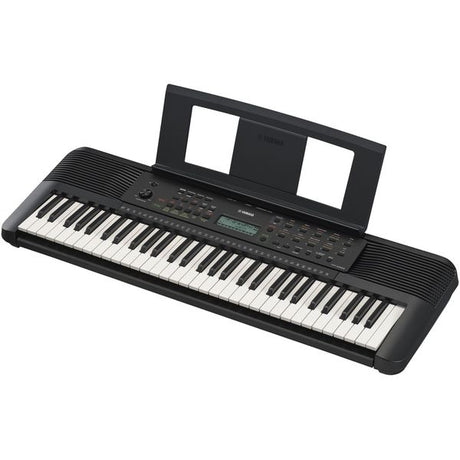
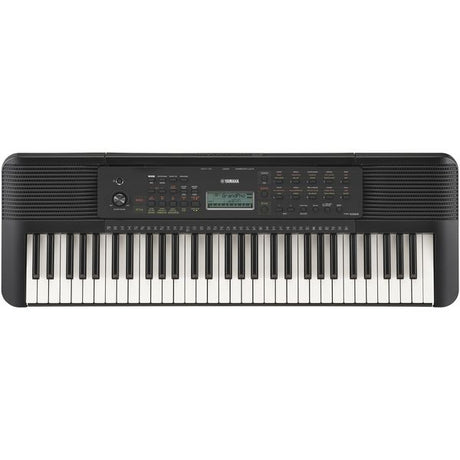
Yamaha PSR-E283 Keyboard – 61 keys, 410 voices, 150 styles with One Touch Settings
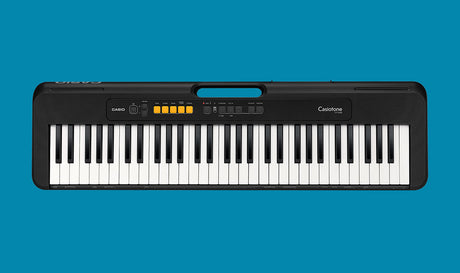
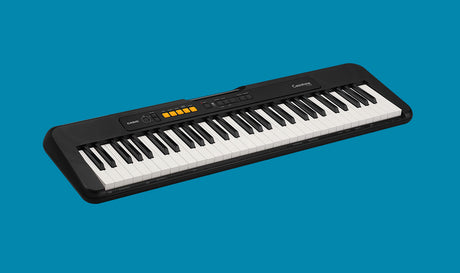
Casio CT-S100 Keyboard – 61 full-size keys, 122 voices, 61 preset rhythms