

Yamaha TransAcoustic answers an old question in a new way: how do you play a real acoustic piano at an adjustable volume, without headphones and without external speakers? The answer lies in the soundboard itself.
In this guide we explain how Yamaha TransAcoustic works technically, what distinguishes the TA3 and TC3 systems, and why TransAcoustic is fundamentally different from a Silent system. For a broader overview of the various quiet-play and hybrid approaches, see our article on Silent and TransAcoustic pianos as well as our explainer on the hybrid piano.
01The core idea: the soundboard as a speaker
An acoustic piano produces its sound through the soundboard: the strings alone would be barely audible, and it is the large wooden surface that passes their vibration into the air. Yamaha TransAcoustic puts this very component to a second use.
Instead of an external speaker, a specially developed transducer sits on the soundboard. It sets the wood vibrating and so turns the soundboard into the piano's speaker. The digital sound is therefore not created in a box beside the instrument, but inside the piano body itself. You do not just hear it, you feel it as you play.
02How TransAcoustic works, step by step
In TransAcoustic mode, the hammer is stopped just before the string by a stopping rail. While that happens, sensors under the keys read exactly how firmly and quickly you play and drive a digital tone generator.
The transducer converts this digital signal into fine vibrations and passes them to the soundboard. The wood radiates the sound, and the volume can be adjusted smoothly, from very quiet to full. Even at a low volume the soundboard still vibrates, so the physical playing sensation of a real piano is retained. Importantly, the strings stay in the instrument. Switch the mode off and you play the piano fully acoustically, just as normal.
03TA3 and TC3: which system sits in which piano
Yamaha builds the TransAcoustic system in two versions. The TC3 is used in the more compact entry-level pianos of the B-series, while the TA3 sits in the higher piano lines such as the YUS-series and in grand pianos. The working principle and the operating idea are the same; the difference lies in the instrument underneath, from a compact upright to a grand.
In our range you will find TransAcoustic across several body styles, from the entry-level upright to the grand piano.


04TransAcoustic or Silent: the decisive difference
The Silent and TransAcoustic systems share the same mechanics: in both cases the hammer is stopped before the string, and optical sensors read the touch. The difference is where the digital sound goes.
With the Silent system the piano stays silent and the sound comes only through headphones, ideal for a late practice session without anyone else listening. TransAcoustic, by contrast, makes the sound audible in the room via the soundboard, without headphones and at an adjustable volume. In short: Silent is playing for yourself, TransAcoustic is quieter but audible playing for the room. Both rely on a real acoustic piano with strings and so differ clearly from string-less hybrid pianos, whose concept we explain separately.
| Feature | TransAcoustic (TA3/TC3) | Silent (SH3/SC3) |
|---|---|---|
| Mechanics | hammer stopped before the string | hammer stopped before the string |
| Sound output | through the soundboard into the room | through headphones |
| External speakers | no, the soundboard is the speaker | no, headphones |
| Volume | adjustable smoothly | headphone level |
| Strings in the piano | yes, fully acoustic playable | yes, fully acoustic playable |
05Who a TransAcoustic piano suits
TransAcoustic is for anyone who wants a real acoustic piano but values consideration and flexibility: playing in the evening at a subdued volume without disturbing the family, while still enjoying the full physical resonance of a wooden instrument. Because the sound comes through the soundboard, the instrument also sounds more natural at low volume than sound from small boxes.
Because the strings are retained, the piano remains a full acoustic instrument: switch the mode off and you play traditionally. You will find an overview of our current models in the new pianos category.


Yamaha TransAcoustic combines a real acoustic piano with the flexibility of an adjustable volume by making the soundboard itself the speaker, with no external boxes and no need for headphones. Anyone who wants a wooden instrument with full string acoustics while also playing considerately quietly will find a distinct path here, clearly set apart from the plain Silent system and from string-less hybrid pianos.
Frequently asked questions
Does a TransAcoustic piano need external speakers?
Does a TransAcoustic piano stay a real acoustic piano?
What is the difference between TransAcoustic and Silent?
What sets TA3 and TC3 apart?
Can I adjust the volume while playing in TransAcoustic mode?
Discover TransAcoustic pianos and grands
From the compact upright to the grand piano: take a look at our current models with the TransAcoustic system.
View new pianosYamaha YUS-3 with TA3Passende Produkte


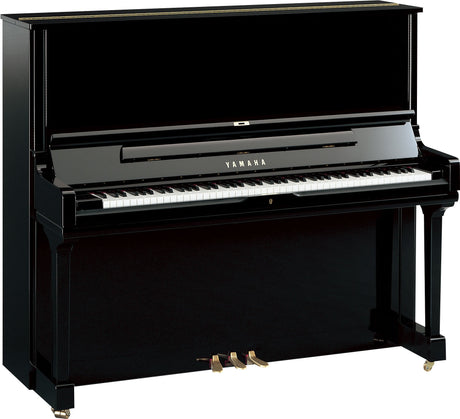

Yamaha YUS-3 Upright Piano in Polished Ebony with TA3 Transacoustic System
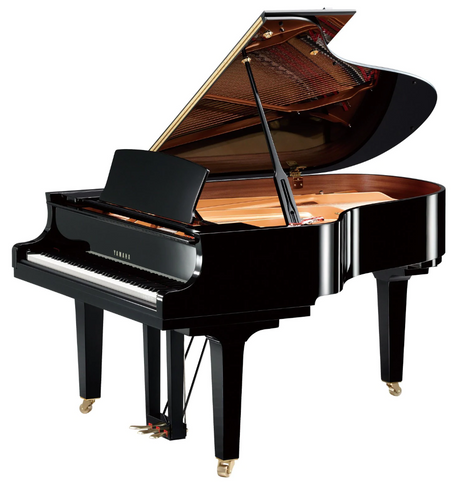
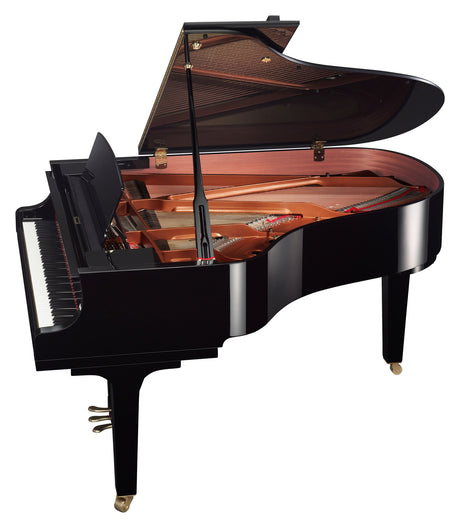

Yamaha YUS-5 Upright Piano in Polished Ebony with TA3 Transacoustic System
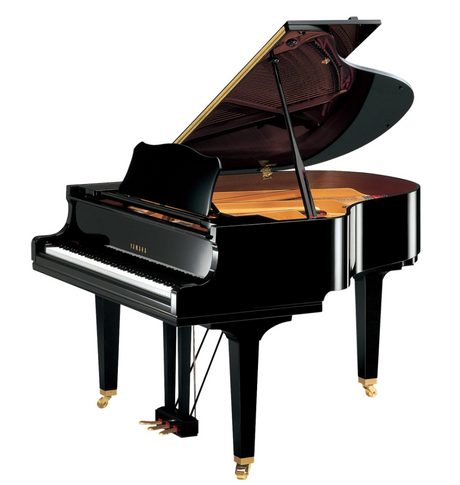

Yamaha GC1 Grand Piano - Polished Ebony with TransAcousitc TA3