

Anyone who plays the saxophone soon notices that embouchure, tone and feel depend heavily on the mouthpiece. A new saxophone mouthpiece often changes the sound more than a new instrument. Yet the choice can seem confusing: numbers, letters, hard rubber or metal, a close or open tip.
This guide sorts out the key parameters and shows what matters for a first upgrade, along with the models that have proven to be reliable points of reference.
01Tip opening: the most important measure
The tip opening describes the gap between the reed tip and the mouthpiece tip. It is the most influential dimension of a mouthpiece and decides how much air flows through and how much resistance you feel.
A close tip speaks more easily, stays in tune and is easy to control. It is the classic choice for beginners and for a classical sound. An open tip lets more air through, produces more volume and resistance and adds projection in jazz and pop. The trade-off is more effort and less margin for an embouchure that is not yet settled.
02Chamber and facing length
Beyond the opening, two more dimensions shape the sound. The chamber is the hollow behind the tip: a large chamber sounds rounder and darker, a small chamber more focused and brighter.
The facing length describes the distance over which the reed lifts off the table. A short facing length combined with a fairly close opening is considered controllable and easy to speak, which makes it attractive for learners and for classical playing.
03Material: hard rubber or metal
The material sets the basic character. Hard rubber, also called ebonite, sounds warm and round and blends harmoniously into an ensemble. It is the classic material and the obvious choice for classical music, chamber music and getting started.
Metal sounds louder, more direct and brighter and cuts through better in loud settings. It is common in jazz, funk and rock. Importantly, the material alone does not make the sound; it is the interplay of tip, chamber and reed. A beginner is almost always better served by hard rubber.
| Trait | Hard rubber / ebonite | Metal |
|---|---|---|
| Tonal character | warm, round, soft | bright, direct, brilliant |
| Volume | moderate | higher, projecting |
| Typical genre | classical, ensemble, start | jazz, funk, rock |
| For beginners | recommended | rather later |
04Matching the reed strength
Mouthpiece and reed form a system and have to match. As a rule of thumb: the more open the tip, the softer the reed. An open tip already offers plenty of resistance, and a reed that is too hard then makes the tone laborious and hard to control.
A closer tip, in turn, takes a slightly harder reed. When you change the mouthpiece, retune the reed strength rather than simply carrying it over. More on this in the reed guide and in the selection at Saxophon - Blätter.
05Proven models for classical and jazz
In the classical world the Selmer Altsaxophonmundstück S80 C* has been the reference point for decades. The C star designation stands for a fairly close tip with a warm, round hard-rubber sound and easy response, which makes it the classic standard choice. For tenor the same concept exists as the Selmer Tenorsaxophon Mundstück S80 C*.
For a slightly more open, more carrying sound within the same family there is the Altsaxophon Mundstück Selmer S90. In jazz, hard-rubber models with a larger chamber and metal mouthpieces have become established. To compare more broadly, the selection is gathered in the Saxophon - Mundstücke category.


06Alto and tenor: each size has its own mouthpiece
A common misconception is that one mouthpiece fits all saxophones. Alto and tenor saxophones come in different sizes, and the mouthpiece has to match the respective body. An alto mouthpiece belongs on the alto saxophone, a tenor mouthpiece on the tenor.
So when upgrading from the stock mouthpiece, choose the model made for your instrument. With the Selmer Tenorsaxophon Mundstück S80 C* the tenor version is already stated in the name.
07When upgrading from the stock mouthpiece pays off
Many entry-level saxophones ship with a simple stock mouthpiece that is fine for the first few months. Once the embouchure is settled and the tone becomes more even, a higher-quality mouthpiece is often the most effective and least expensive upgrade compared with a new instrument.
For a classically oriented path, a close hard-rubber model like the Selmer Altsaxophonmundstück S80 C* is a reliable beginner recommendation: controllable, in tune and without an adjustment hurdle. Only after that does the step to more open tips or metal make sense, when a specific genre sound is the goal.
By thinking about tip opening, material and reed strength together, you choose a mouthpiece deliberately rather than by chance. For getting started a close hard-rubber tip is the safe route; for a louder genre sound the more open or metal version comes later.
Frequently asked questions
What does tip opening mean on a saxophone mouthpiece?
Hard rubber or metal: which is better for beginners?
Does an alto mouthpiece fit a tenor saxophone?
Which reed strength suits my mouthpiece?
When should I upgrade from the stock mouthpiece?
Find the right mouthpiece
Compare models for alto and tenor and match the reed accordingly.
Browse saxophone mouthpiecesSelmer S80 C starPassende Produkte
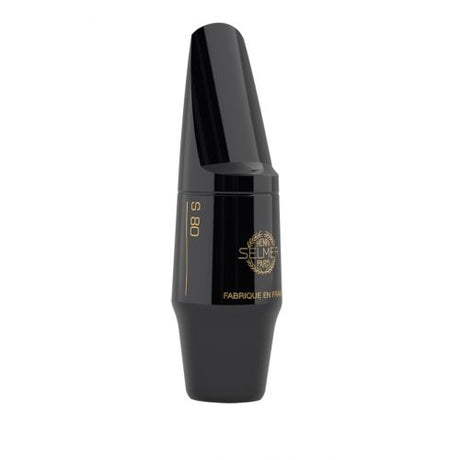
Selmer Alto Saxophone Mouthpiece S80 C*
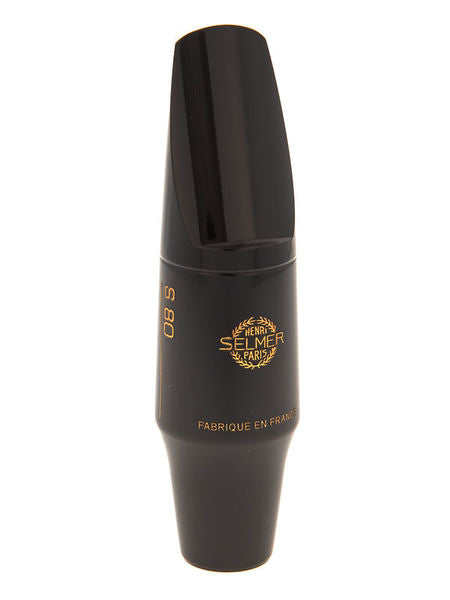
Selmer tenor saxophone mouthpiece S80 C*

Alto saxophone mouthpiece Selmer S90