When school offers a wind class, many parents ask the same thing: cornet or trumpet? These two brass instruments are more closely related than they look. Both are pitched in B flat, have the same three valves with identical fingerings and follow the same mouthpiece principle. A child who starts on one switches easily to the other later.
The difference lies in shape, sound and tradition. This guide explains how cornet and trumpet differ for young beginners and which instrument suits which child.

Compact, round, warm
Ideal for: Younger and smaller children, brass band and concert band tradition
See all Blasinstrumente →
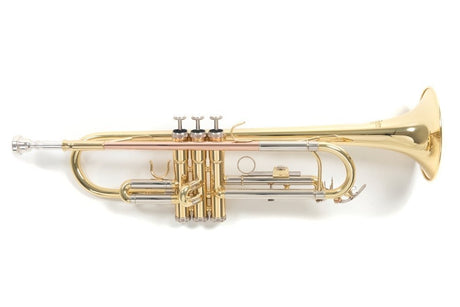
Bright, widespread, versatile
Ideal for: Children with a bit more reach, broad repertoire from classical to jazz
See all Trompeten →01Same fingerings, same mouthpiece principle
First the key point: cornet and trumpet share the same musical basis. Both are in B flat, both have three valves, and the fingering for every note is identical. The mouthpiece also works on the same cup principle, only a little deeper and rounder on the cornet.
For beginners this means a child who starts on the cornet can transfer the learned fingerings and embouchure technique straight to the trumpet later. Switching between the two instruments is therefore straightforward and is often planned into wind classes anyway.
02Shape, size and weight for young beginners
This is where the two part ways. The cornet has a narrower, more tightly coiled bore, which makes it shorter and more compact. It sits closer to the body, is easier to hold and is often more comfortable for small hands. For younger or slighter children that is a real advantage at the start.
The trumpet is more elongated and can feel a little less handy to some children at first, but it is the instrument most people know and that appears in almost every ensemble. If a child is already more developed physically, there is little against starting directly on the trumpet.


03Sound and tradition: brass band versus orchestra and jazz
In terms of sound the cornet is softer, rounder and warmer, the trumpet brighter and more cutting. There are historical reasons for this. In the brass band tradition the cornet is the leading soprano instrument, and it also has a firm place in many concert bands.
The trumpet, by contrast, dominates the symphony orchestra, big band and jazz, giving it the larger and more versatile repertoire. Anyone thinking long term towards jazz or pop is closer to the familiar sound world with the trumpet.
| Feature | Cornet | Trumpet |
|---|---|---|
| Pitch | B flat | B flat |
| Fingerings | identical | identical |
| Shape | short, compact, coiled | elongated |
| Sound | round, warm | bright, direct |
| Holding for small children | easier | a bit more demanding |
| Tradition | brass band, concert band | orchestra, big band, jazz |
| Repertoire and spread | solid | very broad |
04What does the wind class require?
Before deciding, it pays to check the school s requirements. Many wind classes and teachers set the instrumentation so the ensemble sounds coherent. If the plan explicitly names cornet or trumpet, it is best to follow that.
If there is no fixed requirement, the child decides. As a rough guide: for very young or small children the compact cornet is often the more comfortable start, for slightly older children or a clear interest in jazz and pop the more widespread trumpet. In the beginner price range the two are close, so budget rarely decides.

05Care and tuning from the start
Cornet or trumpet, with a little routine the instrument stays in shape for a long time. Oil the valves regularly, keep the slides moving and release moisture after playing, the start needs no more than that.
For intonation, a chromatic tuner like the Korg CA-50 chromatisch Stimmgerät belongs in every beginner case. That way the child learns to tune cleanly from the start, which matters especially within the wind class ensemble.
Cornet or trumpet is not an all or nothing trap: both share pitch, fingerings and the mouthpiece principle, and a later switch is easy. For younger and smaller children the compact cornet is the more comfortable start, for slightly older children or a clear interest in jazz and pop the more widespread trumpet. The child and the wind class requirement make the call.
Frequently asked questions
Is switching from cornet to trumpet difficult?
Which instrument is easier for small children to hold?
Do cornet and trumpet sound different?
Which instrument has the larger repertoire?
Should we follow the wind class requirements?
The right instrument to start with
Cornets and beginner trumpets of solid quality, ready for the first lesson in a school wind class.
Browse trumpetsRoy Benson CR-202 cornetPassende Produkte


Roy Benson CR-202 Cornet – Bb cornet with brass bell, gold-brass leadpipe & stainless-steel valves