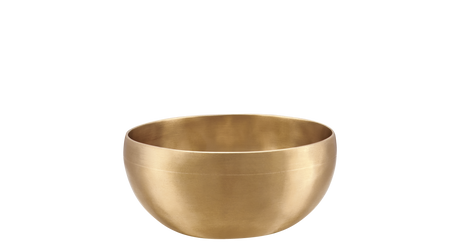
Anyone buying a singing bowl for the first time runs into a lot of terms: Universal series, fundamental tone, felt mallet, friction stick. This beginner's guide sorts the key criteria and shows what really matters for a first singing bowl.
We focus on what counts for getting started: the right size, a balanced sound and a suitable mallet. That way you find a bowl you can begin with right away — without having to work through the entire range first.
01What matters for your first singing bowl
Size and weight shape the sound character more than any other feature. Small, light bowls (around 300–400 g) sound bright and rich in overtones, are handy and good for the desk or on the go. Larger bowls (from about 600 g) deliver a deeper, fuller fundamental tone with a long sustain — pleasant to hold in the hand and for quiet sessions.
Material and craftsmanship: classic metal singing bowls are made from a bronze alloy and hand-hammered. Every hand-made bowl sounds slightly different — that is intentional and gives each its character. There are also crystal singing bowls made of quartz with a very pure, clear tone; they are a sound world of their own and usually the second choice for a first purchase.
Sound depth: a good beginner's tone has a clear fundamental over which the overtones unfold calmly. When struck gently, the sound should hold for a long time and fade out evenly, rather than breaking off quickly.
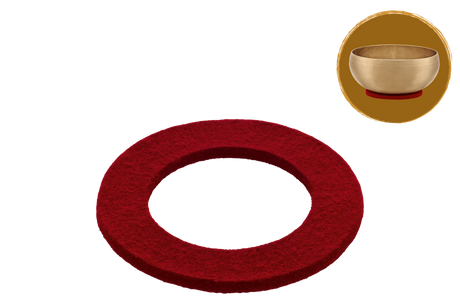
The mallet belongs to the bowl like the bow to the violin. Rule of thumb: the larger the bowl, the softer the mallet — a felt mallet makes deep tones vibrate cleanly. For small bowls, a smaller wooden or leather mallet suits the bright tones. For rubbing the rim (the singing, continuous tone) you use a wooden mallet with a leather covering. Many bowls come with a matching mallet — when buying individually, it is worth checking whether one is included.
02Use: meditation, relaxation, sound
Singing bowls are used above all for meditation, relaxation and conscious sound perception. The even, long-resonating tone helps many people to calm down and to focus on the breath or on the sound itself.
A simple routine is enough to start: place the bowl on the flat hand or a cushion, strike the upper rim gently with the mallet and listen to the tone until it has fully faded. If you like the continuous tone, run the mallet slowly and evenly along the outer rim — with a little practice the bowl begins to "sing".
In yoga and relaxation, singing bowls often mark the beginning and end of a session. They are also common in sound work and educational settings. We describe the sonic and meditative use here — health or therapeutic effects are expressly not promised.
03Our recommendations for getting started
For a first purchase we recommend the Universal series from Meinl Sonic Energy: hand-hammered bronze bowls with a balanced sound, in ascending sizes and the same price range. Three sizes cover the typical beginner's needs — from bright and handy to deep and full-sounding.
The Meinl Sonic Energy Klangschale SB-U-400 is the compact, bright-sounding choice for the desk and short sessions. The Meinl Sonic Energy Klangschale SB-U-500 sits in the middle and offers a balanced tone for everyday use. The Meinl Sonic Energy Klangschale SB-U-600 is the largest of the three and delivers the deepest fundamental tone with the longest sustain. If you prefer to browse, you will find the whole range in the Klangschalen & Esoterik.


04Size, sound character and use at a glance
The following overview helps with a first orientation. The weight figures are reference values for the Universal series and transfer well to other metal singing bowls.
| Size / weight | Sound character | Ideal for |
|---|---|---|
| small, ~300–400 g | bright, rich in overtones, shorter sustain | desk, on the go, bright accents |
| medium, ~500 g | balanced, clear fundamental with overtones | everyday start, meditation |
| large, ~600 g and more | deep, full, long sustain | quiet sessions, holding in the hand |
For getting started, it is less the most expensive bowl that counts than the right one: a balanced size, a clean fundamental and a matching mallet. With a medium Universal bowl you can do little wrong — and you can add further sizes later as needed.
Frequently asked questions
Which size is best for beginners?
Is a set worth it, or is a single bowl enough?
How do I play a singing bowl correctly?
Which mallet suits my bowl?
Ready for your first singing bowl?
Browse our selection of singing bowls and find the right model for your start.
View all singing bowlsBeginner pick: SB-U-500Passende Produkte
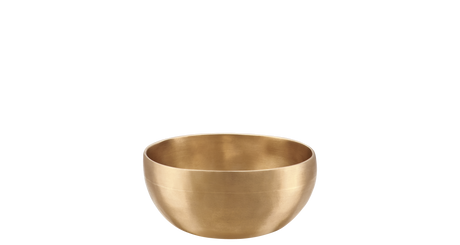
MEINL Sonic Energy SB-U-400 singing bowl – bronze alloy, 12 cm, handmade in India
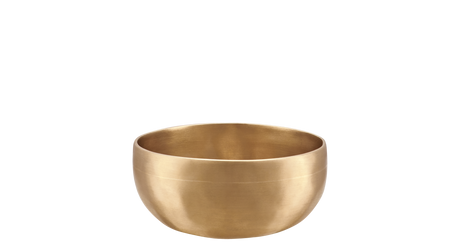
MEINL Sonic Energy SB-U-500 singing bowl – 12.5–13 cm, 470–520 g, bronze alloy, handmade in India