

If you want to buy a digital piano, one question comes up fast: how many keys does a digital piano actually need. 61, 76 or 88 keys are on offer, and the price gap is noticeable. The short answer: if you want to learn piano properly, 88 weighted keys are the best choice. Still, there are situations where 76 or 61 keys make sense.
Just as important as the key count is how the keys feel. A full set of unweighted keys does little for real piano playing. So we look at both dimensions together: range and weighting.

The full piano range
Ideal for: Learning piano, lessons, classical and demanding repertoire
See all Digitalpianos →Compact and lighter
Ideal for: Children starting out, entertainment, little space or frequent transport
See all Digitalpianos →0188 keys: the standard for learning piano
88 keys match the full range of an acoustic piano, from the lowest to the highest note. If you are serious about learning piano, you should practise on this range from the start. Your hands get used to the right orientation on the keyboard, and no piece has to be worked around because the extreme octaves are missing.
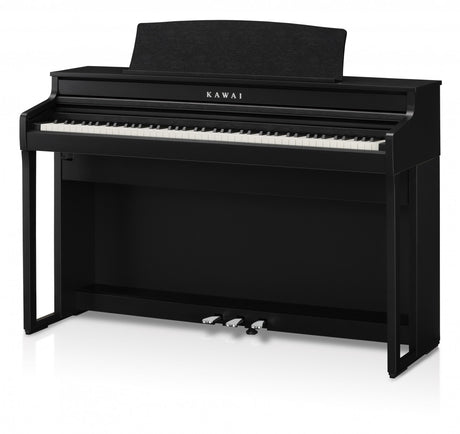
The combination with a weighted hammer action is decisive. It mimics the resistance of real hammers in a piano and is the basis for building clean touch technique. Many music schools require an instrument with 88 weighted keys for lessons. A classic entry-level upright-style model with this setup is the Yamaha Digitalpiano Arius YDP-146 Weiß; for a particularly authentic keyboard with wooden keys, see the Kawai Digitalpiano CA-401.


0276 keys: the compromise
76 keys cover a large part of the repertoire and are lighter and often cheaper than a full-range instrument. That makes them appealing when space is tight or the instrument is moved often, for example for the stage or the rehearsal room.
The catch: the outermost octaves are missing. With demanding classical or romantic literature you run into limits, because some very low or very high notes are simply not there. If you expect to stay with classical piano playing, you usually move to the full range after a year at the latest. As a pure learning instrument for piano, 76 keys are therefore the second-best route.
0361 keys: the keyboard range
61 keys are the classic arranger-keyboard range. Such instruments are compact, light and affordable, and mostly unweighted, so without hammer action. For a child s very first contact, for trying things out or for entertainment with many sounds and auto-accompaniment, they are a good fit.
For serious piano learning, 61 keys are not the right choice. The range is missing, and without weighted keys you cannot build real touch technique. If you know early that the direction is piano, an 88-key instrument from the start saves the second purchase.
04Key count is not the same as weighting
A common misconception: many keys alone do not make a piano feel. Key count and weighting are two different things. There are 88-key instruments with a light, unweighted keyboard and more compact models with real hammer action.
For learning piano, both count together: the full 88-key range plus a weighted hammer action. One step above are keyboards with wooden keys, which come even closer to the feel of an acoustic piano. If you are torn between a pure stage instrument and a home digital piano, also keep the difference between stage piano and digital piano in mind, since they target different uses. A selection of full-range, weighted-key models, from entry level to premium, is in the Digitalpianos.


| Keys | Typical weighting | Ideal for | For learning piano |
|---|---|---|---|
| 61 | mostly unweighted | child start, entertainment | not recommended |
| 76 | sometimes weighted | stage, little space, transport | compromise |
| 88 | weighted hammer action | piano lessons, full range | the right choice |
The clear recommendation for learning piano: 88 keys with a weighted hammer action. 76 keys are an acceptable compromise where space is tight or for stage use, 61 keys suit the keyboard entry and entertainment, not serious piano playing. Always look at both: range and weighting.
Frequently asked questions
How many keys does a digital piano need for learning piano?
Are 61 keys enough for beginners?
What is the difference between key count and weighting?
Are 76 keys a good compromise?
Find the right digital piano
Models with a full 88-key range and weighted keys, from entry level to premium.
See all digital pianosEntry-level upright modelPassende Produkte


Yamaha Arius YDP-146 Digital Piano White – 70 € Cashback


Roland F-107 Digital Piano for Home with Bluetooth & SuperNATURAL Sound


